


Multiple Iheritance Ambiguity
🚀 Exploring Challenges in Multiple Inheritance in Object-Oriented Programming 🤯
Multiple Inheritance is a powerful concept in the realm of object-oriented programming, yet it presents
its own unique
set of challenges. In this post, I'll delve into three common issues associated with it and discuss how
we can tackle
them effectively.
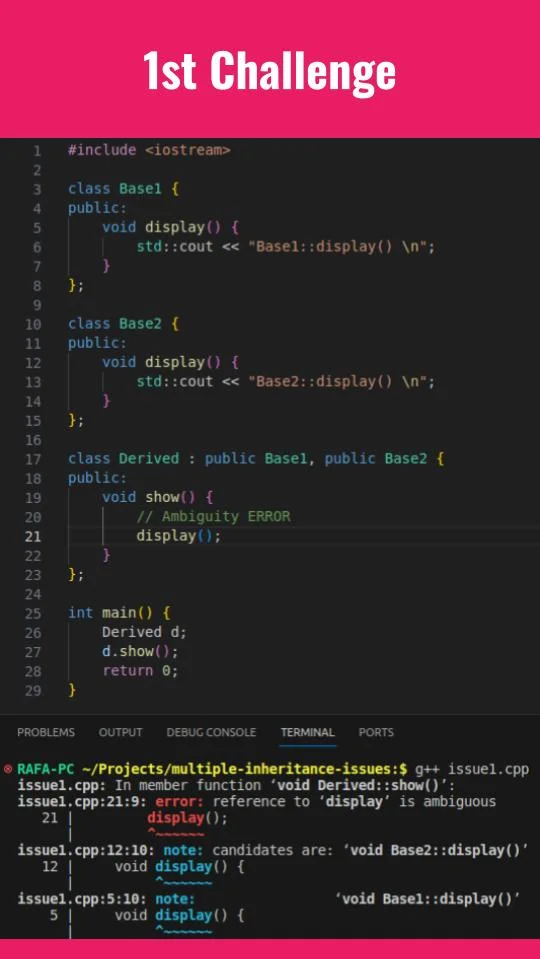
🔵 Challenge 1: Ambiguity of Inherited Members 🔄
Imagine a scenario where a class inherits from two others, both containing members with the same name.
Direct access to
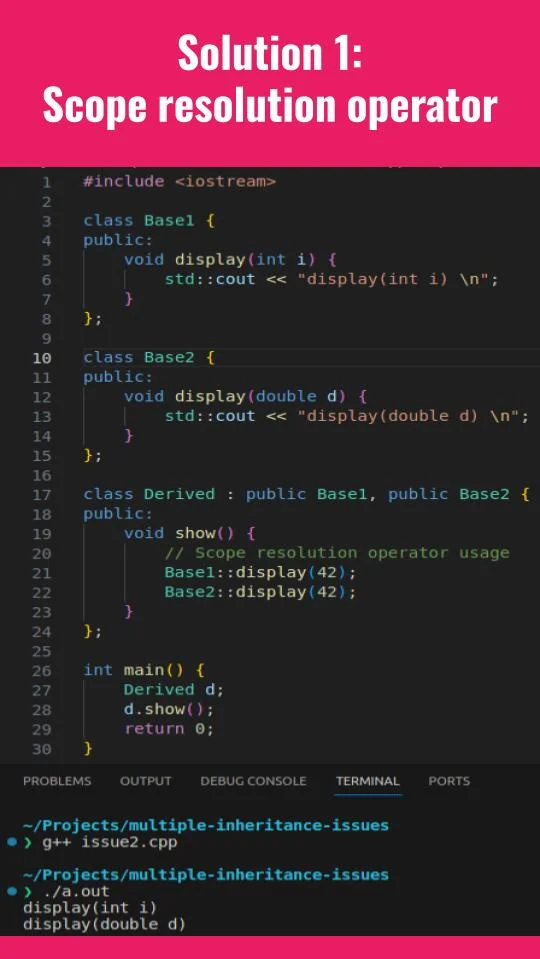
these members leads to compilation errors due to ambiguity. Fear not! To resolve this, employ the scope
resolution
operator to explicitly instruct the compiler which member to utilize.
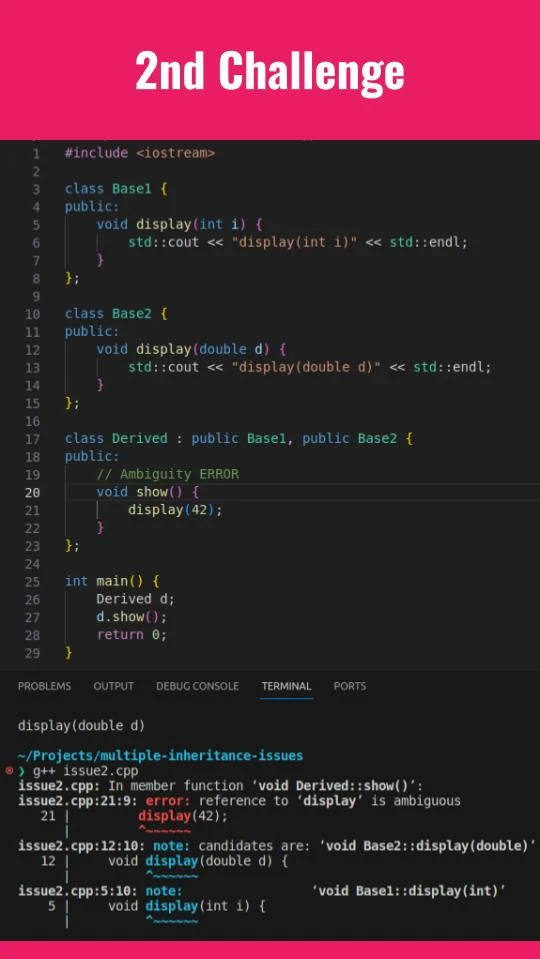
🔵 Challenge 2: Ambiguity of Overloaded Members 📝
What if you inherit two functions with the same name but different signatures? When these functions
reside in different
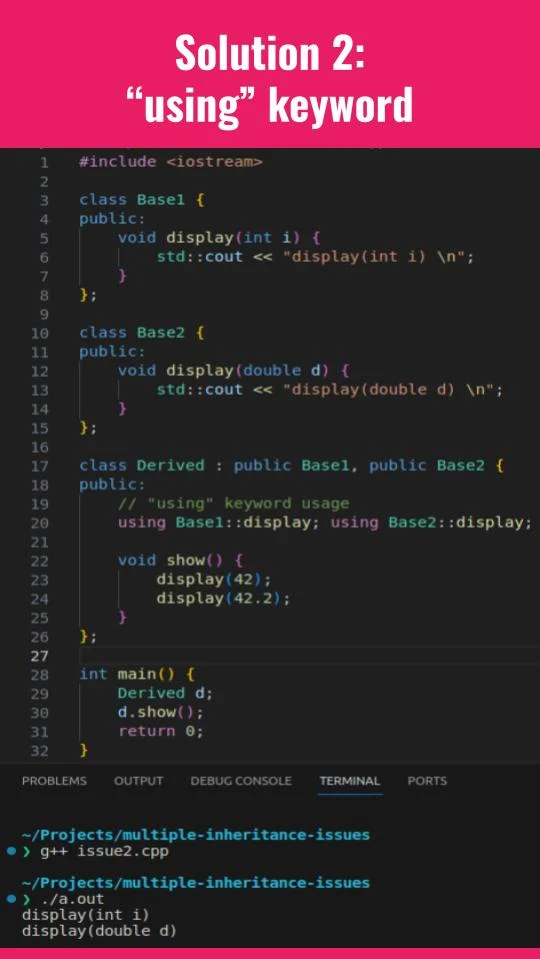
scopes, overloading doesn't work, resulting in frustrating compilation errors. To conquer this
challenge, once again,
turn to the trusty scope resolution operator or the "using" keyword for clarity and resolution.
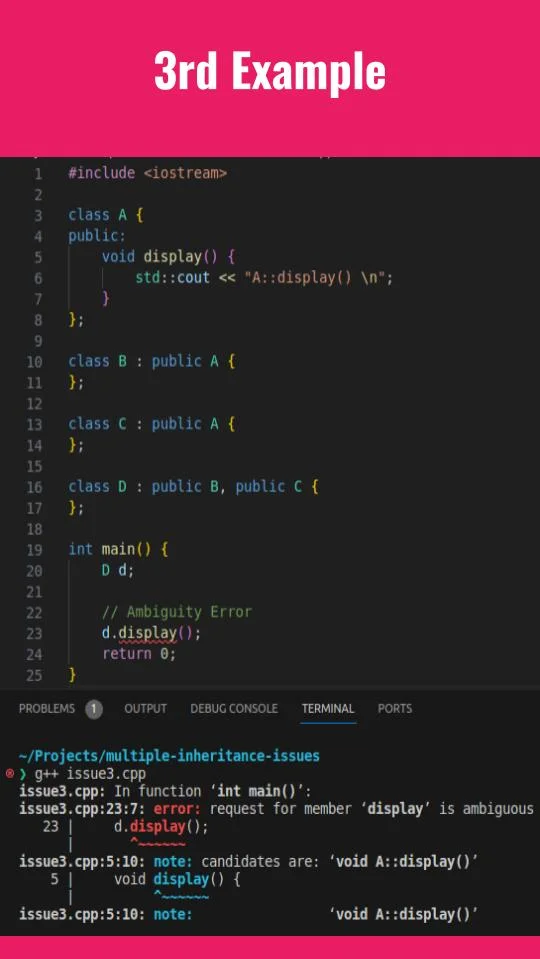
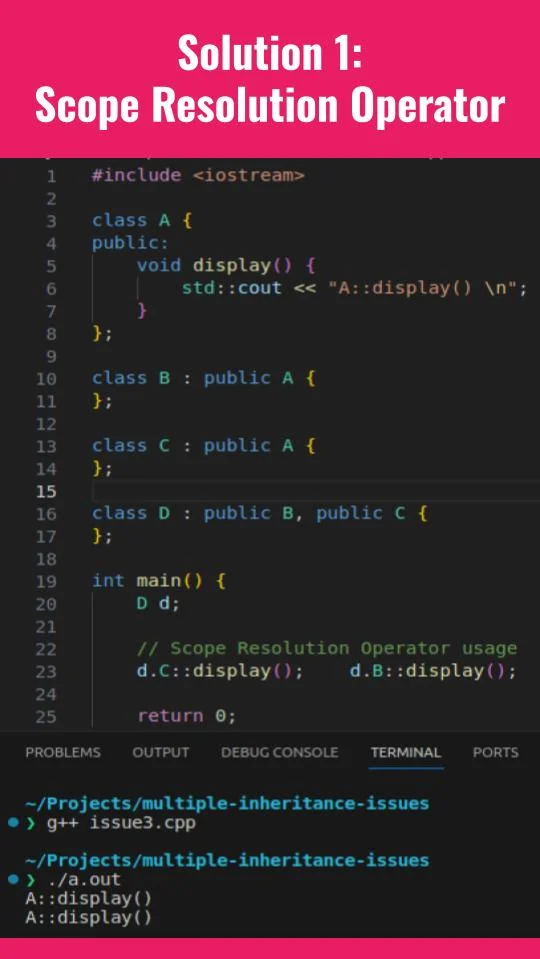
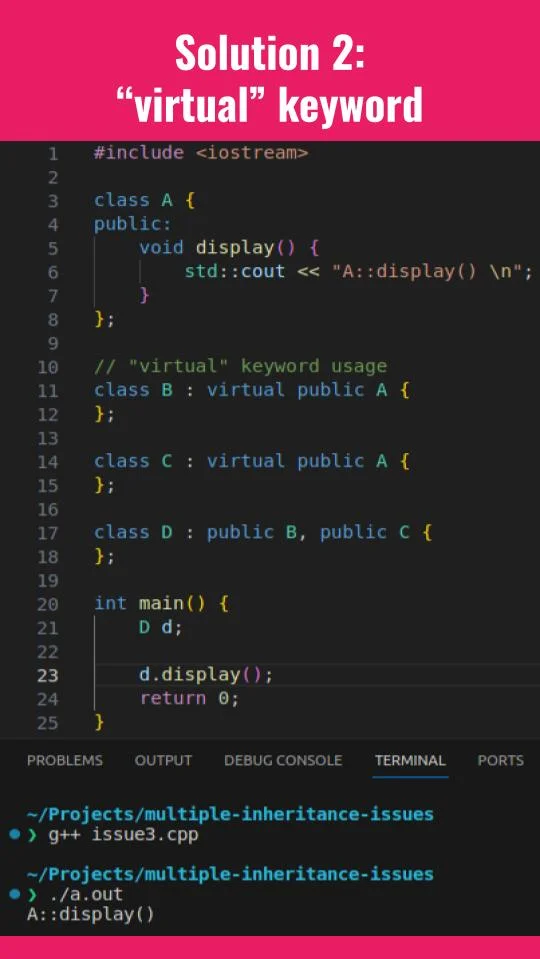
🔵 Challenge 3: Ambiguity due to Duplicate Inheritance 🔄📂
Occasionally, ambiguity arises when the same member is inherited through different paths, causing
confusion during
access. A straightforward solution may be to declare a member as virtual, ensuring that the class only
inherits one
instance of it. This effectively eliminates the ambiguity. Another solution could be to use the scope
resolution
operator.
In summary, Multiple Inheritance in object-oriented programming is a powerful tool, but it requires
careful handling to
overcome challenges related to ambiguity. By mastering the scope resolution operator, "using" keyword,
and understanding
the importance of virtual inheritance, you can navigate these challenges with confidence.
#Programming #ObjectOriented #MultipleInheritance #CPlusPlus #SoftwareEngineering